


Understanding the Context of Potential Tesla and SpaceX Merger
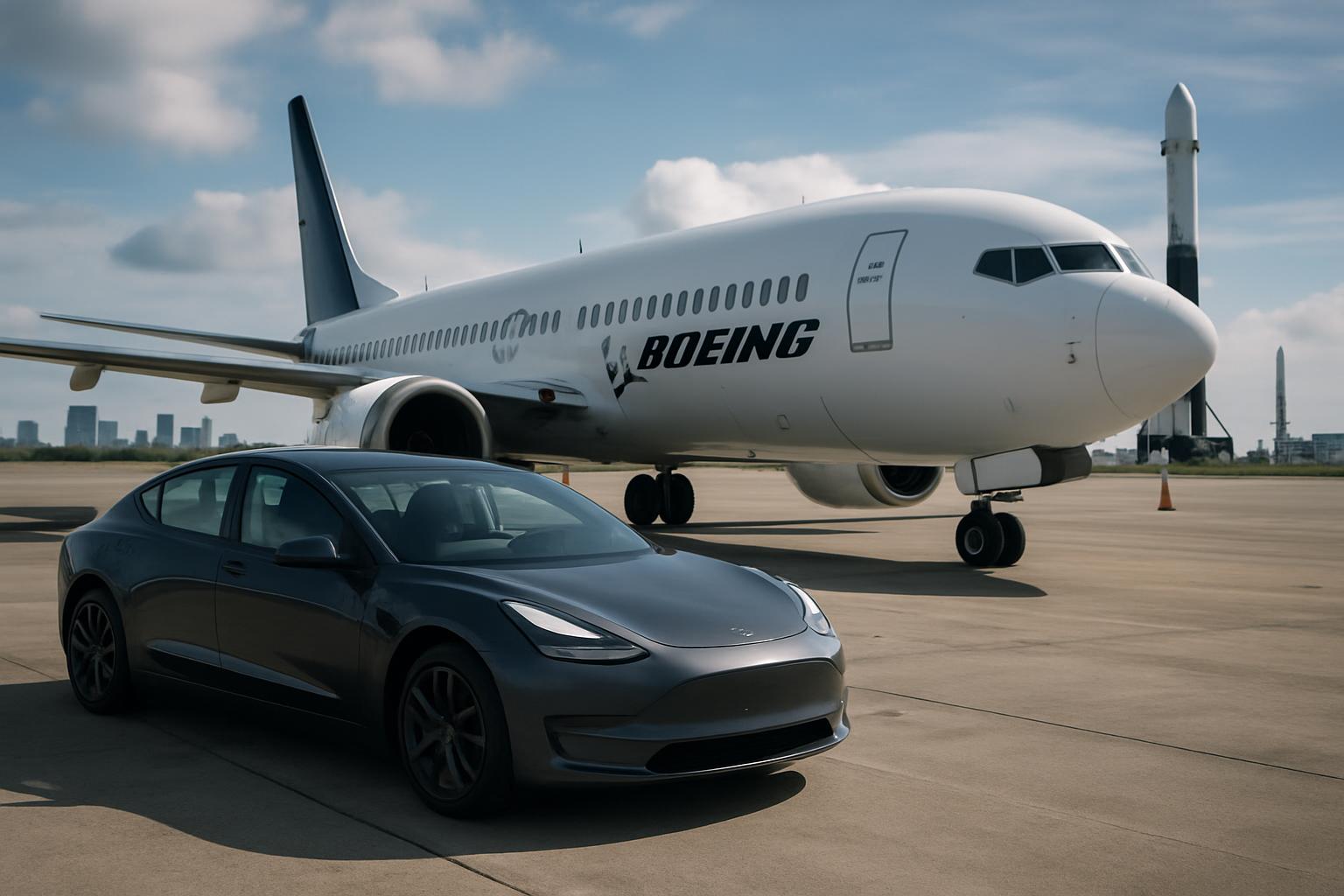
Speculation has arisen around the possibility of Elon Musk merging Tesla (NASDAQ: TSLA) and SpaceX within the next decade. While this remains purely hypothetical at this stage, industry analysts and observers have begun to consider the potential implications of such a merger for the aerospace and technology sectors.
The Impact on Boeing’s Position in the Market
Boeing (NYSE: BA), a longstanding leader in aerospace manufacturing and defense, could face substantial challenges if a combined Tesla and SpaceX were to emerge as a dominant force. This hypothetical scenario would intensify competition in areas ranging from commercial aviation to space exploration, potentially eroding Boeing’s market share and revenue streams.
Current State of Boeing’s Business
As of early 2026, Boeing is in the midst of a delicate recovery. The company’s first-quarter revenue reached approximately $22.2 billion, representing a 14% increase compared to the previous year. However, despite revenue growth, Boeing reported a core loss per share of $0.20 and a negative free cash flow of around $1.45 billion. The commercial airplanes division experienced a negative operating margin of 6.1%, highlighting ongoing challenges.
Nevertheless, Boeing’s order backlog remains robust at a record $695 billion, and the company has successfully reduced its debt from $54.1 billion to about $47.2 billion. CEO Kelly Ortberg expressed confidence in Boeing’s momentum, emphasizing the company’s expanding backlog and ongoing projects like the Artemis II mission.
Stock Performance and Market Sentiment
Despite these positive indicators, Boeing’s stock price has experienced volatility, recently closing at $215.01, down approximately 9.2% over the past week. Market sentiment remains cautious, with some analysts assigning a probability of around 29.5% for the U.S. government to take a stake in Boeing by the end of the year.
Potential Threats from a Tesla-Spacex Merger
A merger between Tesla and SpaceX would create a formidable competitor combining advanced manufacturing, artificial intelligence (AI), and space launch capabilities. Tesla’s expertise in electric vehicles and AI-driven robotics, alongside SpaceX’s dominance in space launch services, could revolutionize the aerospace and defense sectors.
- Vertical integration and innovation in manufacturing
- Expansion into defense robotics through Tesla’s Optimus project
- Enhanced AI capabilities for aerospace applications
- Increased capital markets advantage if SpaceX goes public post-merger
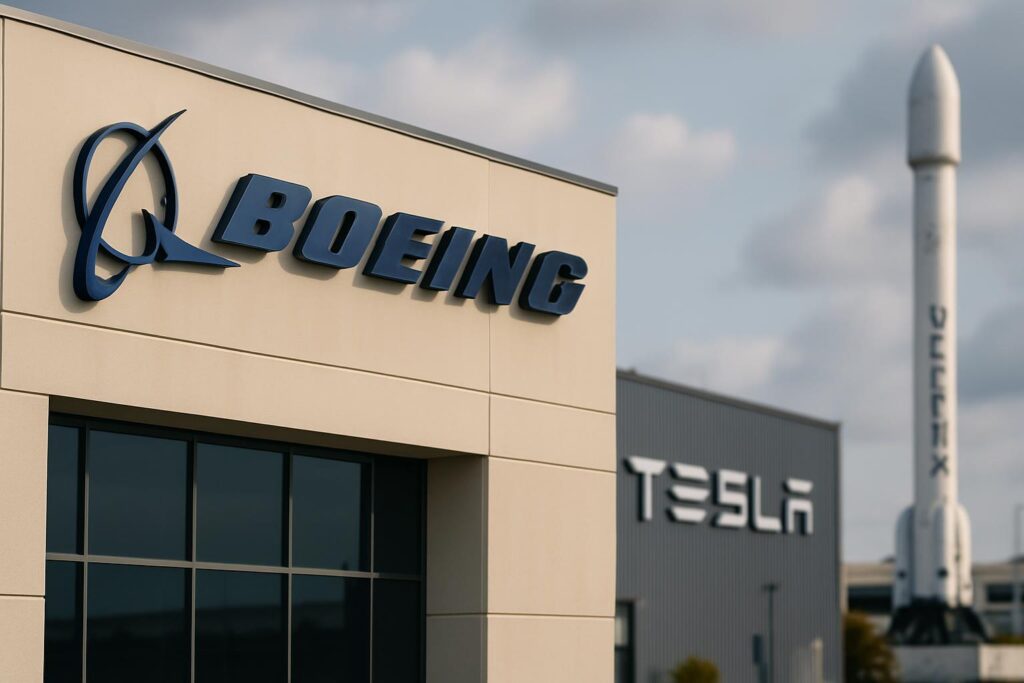
This emerging competitor could challenge Boeing’s existing defense contracts, satellite manufacturing, and commercial aircraft sales. Specifically, Tesla-Spacex’s potential entry into defense robotics and aerospace could disrupt Boeing’s current relationships and contracts, including programs like Starliner versus Crew Dragon and satellite developments like Starlink.
Insider Confidence and Market Sentiment
Recent insider trading activity indicates a cautious stance among Boeing executives. For example, CEO Kelly Ortberg sold over 5,000 shares at $236.71 per share in early 2026, alongside other senior leaders. This could reflect a degree of uncertainty about Boeing’s near-term prospects amid increasing competition and internal challenges.
Competitive Landscape
Other aerospace giants, such as Lockheed Martin and Northrop Grumman, continue to perform strongly, with stock prices up year-to-date and significant defense contracts. Lockheed, for instance, has secured multi-billion-dollar deals and is increasing production capacity, demonstrating resilience in the defense sector.
Conclusion: A High-Stakes Future for Boeing
While Boeing remains a key player in aerospace and defense, the hypothetical merging of Tesla and SpaceX poses a substantial strategic threat. The combination of innovative technology, space dominance, and AI capabilities could reshape the competitive landscape, challenging Boeing’s market position during a period of internal recovery and external uncertainty.
Stakeholders and investors should closely monitor developments in these sectors, as the emergence of a tech-giant merged entity could significantly influence aerospace dynamics in the coming years.