




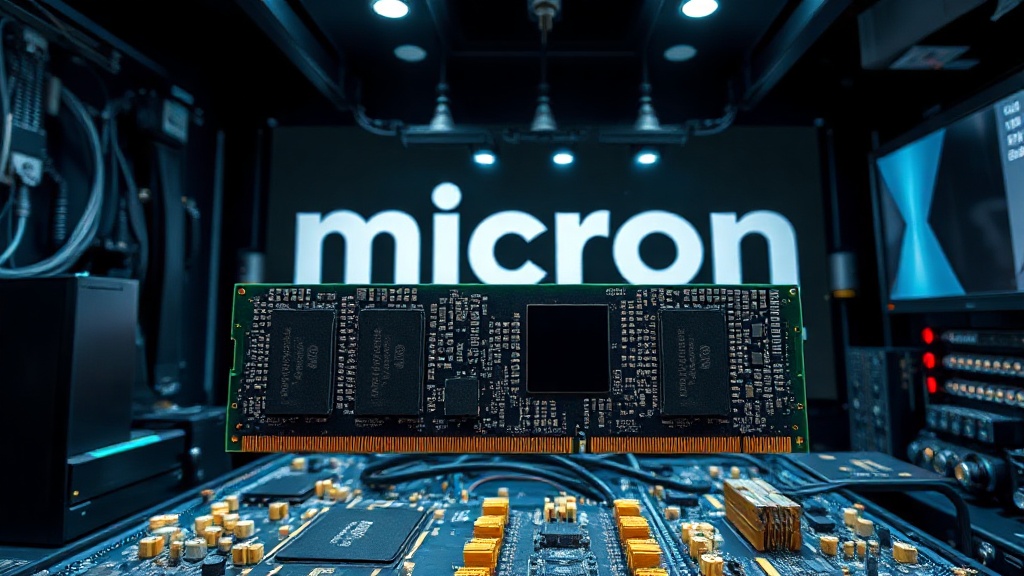
Record-Breaking Valuation and Market Context
Micron Technology (NASDAQ: MU) recently reached a significant milestone, becoming the 12th U.S. company to achieve a $1 trillion market capitalization. The semiconductor firm accomplished this feat in record time, doubling its valuation from $500 billion to $1 trillion in just 48 days. This pace surpassed previous records set by Tesla, which took 230 days to achieve a similar transition, and Nvidia, which required nearly 500 days.
This rapid ascent is largely attributed to an acute global shortage of memory chips, a critical component in the infrastructure required to power artificial intelligence (AI). As demand for AI-specific hardware surges, the industry has seen significant price appreciation for memory components, bolstered by the need for high-bandwidth memory (HBM) that feeds data to graphics processing units (GPUs).
The Role of Memory in AI Infrastructure
While CPUs and GPUs are frequently cited as the primary drivers of AI advancement, memory chips serve as the foundational layer for these systems. According to J.P. Morgan strategist Meera Pandit, CPUs rely on NAND for long-term storage and DRAM for active task processing. In the context of AI, HBM—a specialized form of DRAM—has become essential for high-speed data transmission.
Micron currently maintains a strong competitive position in this segment, ranking third in DRAM production and tied for second place in the HBM market, according to data from Counterpoint Research.
Financial Performance and Market Outlook
Micron’s fiscal second-quarter 2026 results highlighted the impact of current market conditions. The company reported a 196% revenue increase to $23.8 billion, with non-GAAP net income rising 682% to $12.20 per diluted share. However, analysts point out that these figures are heavily influenced by temporary price surges rather than long-term competitive moats.
Looking ahead, market participants are monitoring the cyclical nature of the semiconductor industry. While analysts project annual earnings growth of 92% through 2028, there is a consensus expectation that the market will shift significantly thereafter. Forecasts suggest a potential 70% drop in adjusted earnings by 2029 as new fabrication capacity from competitors like Samsung and SK Hynix comes online, likely easing the current supply-demand imbalance.
Wall Street Sentiment
Despite the company’s recent performance, Wall Street sentiment remains cautious regarding the current share price. The median price target for Micron sits at $840, implying approximately 15% downside from recent trading levels near $990. Analysts note that while Micron has historically outperformed earnings expectations, the current valuation of 45 times earnings reflects a premium that assumes continued, aggressive growth in the memory cycle.
As the industry approaches what many economists and analysts believe will be a cyclical peak in 2028, the sustainability of current pricing power remains a primary focus for institutional investors and market analysts alike.