




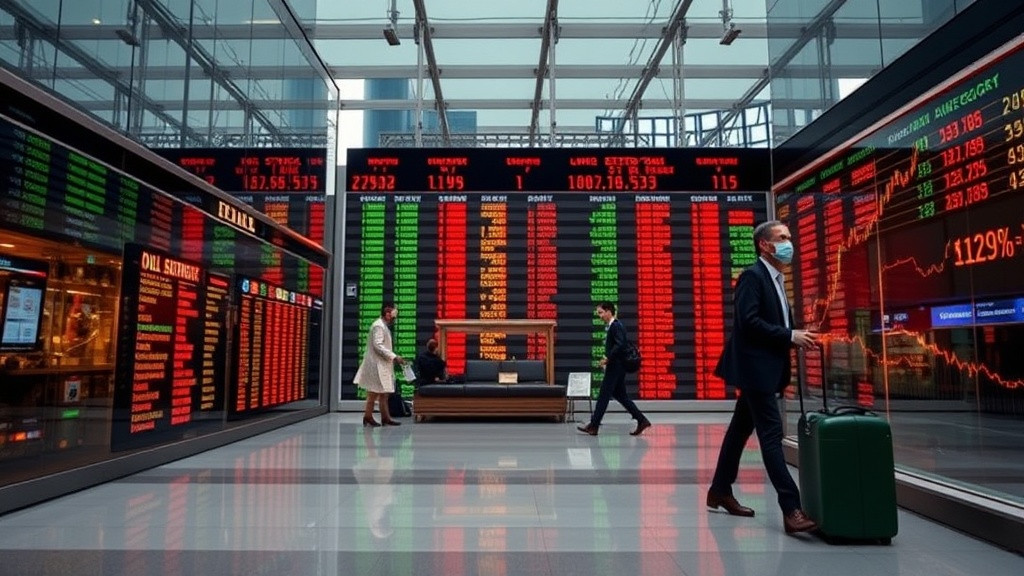
Market Volatility Returns Amid Geopolitical Tensions
European stock markets saw a pullback on Tuesday as fresh U.S. military strikes in southern Iran reignited concerns regarding stability in the Middle East. The military action, which the U.S. described as a defensive measure, dampened investor optimism that a peace deal to end the ongoing conflict—which has disrupted global energy supplies since late February—was on the immediate horizon.
Following the news, the STOXX 600 index dipped 0.2%, while Germany’s DAX declined by 0.5%. Conversely, London’s FTSE 100 managed to buck the regional trend, recording a 0.7% gain. Despite the day’s losses, many European indices remain near their highs for the period since the conflict began.
Energy Markets React to Ongoing Instability
The uncertainty in the region had an immediate impact on commodity prices:
- Brent Crude: Futures rose by 2.4% to reach $98.50 per barrel.
- WTI Crude: U.S. West Texas Intermediate stood at $92.04, reflecting a 4.7% decline from Friday’s close following the U.S. Memorial Day holiday.
Analysts suggest that while the geopolitical situation remains fluid, some optimism persists among traders regarding the potential reopening of the Strait of Hormuz. Global macro strategist Peter Schaffrik of RBC Capital Markets noted that the rapid shift from diplomatic expectations to renewed military activity has created significant market uncertainty.
Central Bank Policy and Economic Outlook
Beyond the immediate impact of the strikes, investors are closely monitoring the European Central Bank (ECB). Board member Isabel Schnabel recently stated that the ECB should proceed with interest rate hikes in June, regardless of the outcome of current peace negotiations. She emphasized that the prolonged nature of the conflict and its resulting high energy costs are increasingly affecting the broader economy.

Current market data suggests there is approximately a 90% probability of an interest rate hike at the ECB’s upcoming June meeting. Meanwhile, European bond yields saw a slight increase on Tuesday, though German 10-year yields remain near seven-week lows.
Broader Market Sentiment
While European markets faced pressure, the outlook for Wall Street remains more positive, with futures for the S&P 500 and Nasdaq indicating potential gains. Other asset classes showed mixed results: the U.S. dollar remained steady against major currencies, while gold prices experienced a decline of approximately 0.8%, trading at $4,534.86.
“It went from agreement is near to everyone needs to sign the Abraham Accords to bombing, so it’s not entirely clear what’s going on there,” said Peter Schaffrik, global macro strategist at RBC Capital Markets.