




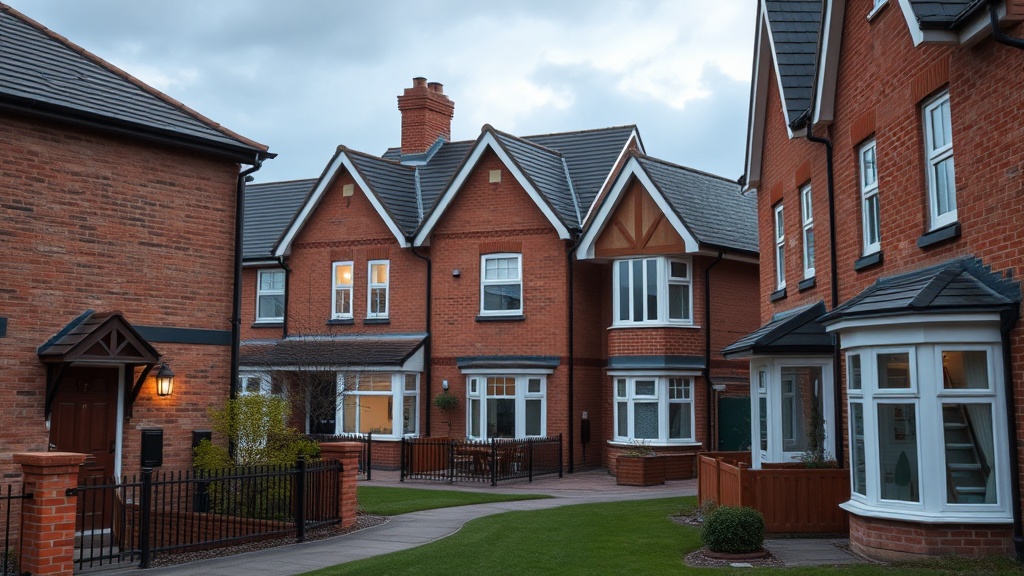
UK Housing Market Sees First Monthly Price Drop of 2026
The UK housing market has experienced its first monthly price decline of the year, according to the latest data from Nationwide. Figures released for May indicate a 0.6% fall in average property prices, a shift that marks a cooling period for a sector that had previously maintained a record-high trajectory.
Following this monthly dip, the annual rate of house price inflation has moderated to 1.7% in May, down from the 3% recorded in April. The average cost of a property in the UK now stands at £278,024.
Geopolitical Tensions and Mortgage Affordability
Industry experts point to the ongoing crisis in the Middle East as a primary catalyst for the recent loss of momentum. The conflict has triggered a rise in energy costs and prompted an increase in market interest rates, both of which have placed significant pressure on the housing sector.
“Given the uncertainty caused by developments in the Middle East and the subsequent rise in energy prices and market interest rates, some loss of momentum was to be expected,” said Robert Gardner, Nationwide’s chief economist.
Consumer sentiment appears to be directly impacted by these broader economic concerns. Data from GfK shows that headline consumer confidence has weakened, reaching its lowest point since late 2023 during the month of April, with only a marginal recovery observed in May. Furthermore, the Royal Institution of Chartered Surveyors (RICS) reported a notable decline in new buyer enquiries, reflecting a broader deterioration in market sentiment.
Market Resilience Under Pressure
While the recent dip suggests that the market’s resilience is being tested, analysts caution against over-interpreting a single month of data. Martin Beck, chief economist at WPI Strategy, noted that while the current environment makes consistent near-term growth difficult, recent diplomatic developments and potential progress in peace talks have helped to mitigate the risk of a more severe inflationary shock.
Despite these signs of stabilization, the affordability gap remains a major hurdle, particularly for first-time buyers. High mortgage rates—which continue to sit well above the ultra-low levels that defined the previous decade—coupled with sluggish income growth, remain the primary headwinds for prospective homeowners. As the market navigates these challenges, all eyes remain on future interest rate movements and the stability of the wider economy.