


Mortgage and Refinance Rates Continue to Climb Amidst Market Fluctuations
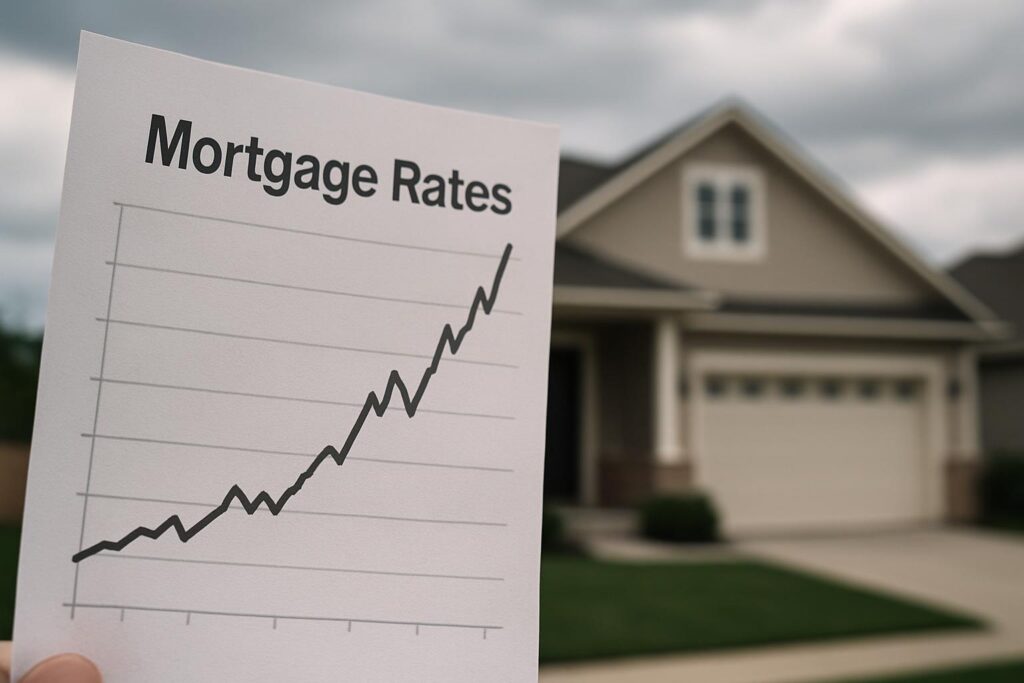
As of May 19, 2026, mortgage rates in the United States are on the rise, impacting prospective homebuyers and those looking to refinance existing mortgages. The latest data from the Zillow lender marketplace indicates that nearly all major mortgage rates have increased compared to the previous day, signaling a continuing trend of rising borrowing costs in the housing market.
Current Mortgage Rates Snapshot
Here are the national average mortgage rates for May 19, 2026, rounded to the nearest hundredth:
- 30-year fixed rate: 6.41%
- 20-year fixed rate: 6.39% (up 32 basis points)
- 15-year fixed rate: 5.84% (up 4 basis points)
- 5/1 Adjustable-Rate Mortgage (ARM): 6.50% (up 18 basis points)
- 30-year VA loan rate: 6.00% (up 17 basis points)
These figures reflect the average rates across the country, but actual rates can vary depending on individual financial profiles and regional market conditions.
Implications for Homebuyers and Refinancers
The upward movement in mortgage rates affects both new homebuyers and those considering refinancing their current loans. Higher rates typically translate into increased monthly payments and higher overall interest costs over the life of a loan. For instance, a $400,000 mortgage at a 6.19% rate over 30 years would result in monthly payments of approximately $2,447, with total interest payments exceeding $480,000.
Conversely, shorter-term loans like a 15-year fixed mortgage usually offer lower interest rates—around 5.65%—but require higher monthly payments, approximately $3,300 for the same $400,000 principal. Borrowers must weigh the benefits of lower total interest costs against higher monthly obligations.
Refinancing Trends and Opportunities
Refinance rates have also increased, which could influence homeowners’ decisions to refinance their mortgages. Despite higher rates, refinancing can still be advantageous, especially if current rates are lower than what homeowners are paying or if market conditions favor refinancing for other reasons, such as securing a fixed-rate loan or cash-out options.
Fixed-Rate vs. Adjustable-Rate Mortgages
Choosing between a fixed-rate and an adjustable-rate mortgage depends on your financial goals and risk tolerance:
- Fixed-rate mortgage: Offers stability with an unchanged interest rate over the loan term, ideal for those planning to stay in their home long-term.
- Adjustable-rate mortgage (ARM): Starts with a lower initial rate but can fluctuate after the initial fixed period, potentially increasing your payments in the future.
Recent trends show that ARM rates have been starting higher than fixed rates, which is an important consideration for borrowers.
Looking Ahead: Will Rates Decline?
Market forecasts suggest that mortgage rates may remain elevated through 2026, with projections from the Mortgage Bankers Association (MBA) indicating rates near 6.50% for the year. Fannie Mae also predicts similar levels, estimating a 30-year fixed rate around 6.3% for the same period. Experts believe that rates could stay relatively stable into 2027, with some forecasts suggesting a slight decrease to around 6.20%.
Advice for Homebuyers and Borrowers
Given the current trends, prospective buyers and homeowners should consider the following:
- Assess your financial situation: Ensure your credit score and finances are in good shape to secure the best possible rate.
- Shop around: Compare offers from different lenders to find favorable terms.
- Consider long-term plans: Decide if locking in a fixed rate aligns with your future housing plans or if an ARM could offer savings.
- Use mortgage calculators: Tools can help you estimate monthly payments based on different interest rates and loan terms.
- Stay informed: Keep an eye on market forecasts and economic indicators that influence mortgage rates.
Conclusion
With mortgage rates continuing their upward trajectory in May 2026, both homebuyers and existing homeowners need to evaluate their options carefully. While rising rates may temper enthusiasm for new home purchases or refinancing, strategic planning and market awareness can help borrowers make informed decisions in this evolving environment.