




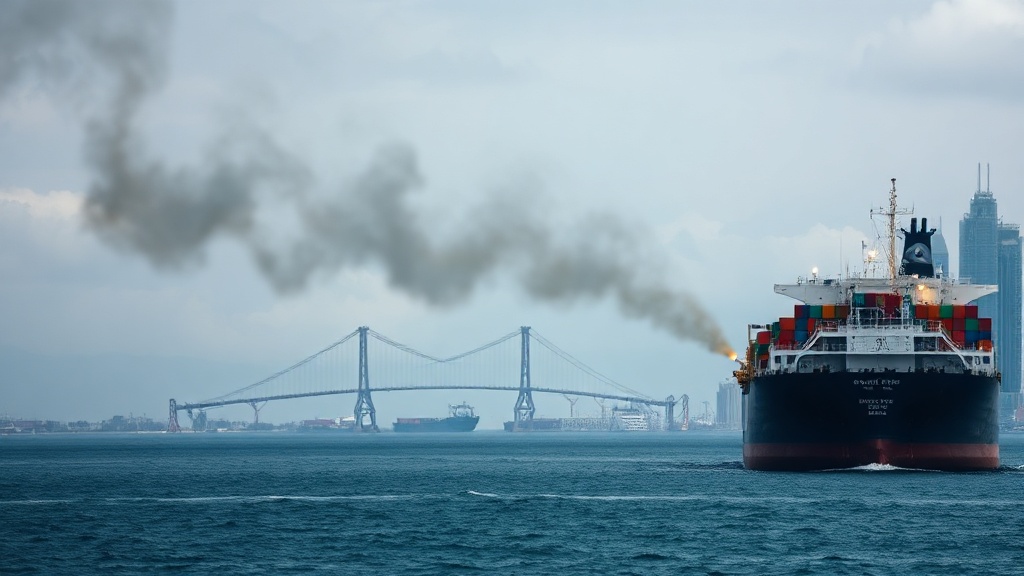
Market Response to US-Iran Peace Agreement
Global energy markets have experienced a significant shift following the announcement of a peace deal between the United States and Iran. The agreement, which paves the way for the reopening of the Strait of Hormuz to tanker traffic, has provided immediate relief to global oil and gas benchmarks after more than 100 days of severe supply chain disruptions.
Following confirmation of the deal, Brent crude prices fell to $83 per barrel, a three-month low. This represents a substantial decline from the $126 peak observed during the height of the crisis, although prices remain elevated compared to last year’s average of $69 per barrel. Wholesale gas prices also saw an immediate impact, dropping approximately 6%.
The Path to Supply Normalization
Despite the positive market sentiment, analysts warn that a full return to pre-crisis supply levels is likely to be a protracted process. While the Strait of Hormuz is slated for mine removal and reopening, logistical hurdles remain significant. According to Neil Shearing, chief economist at Capital Economics, the process involves more than just clearing the shipping lane:
“Even if ships now have safe passage, tankers are in the wrong place, oil production and refining facilities need to get up to full capacity, and questions over the cost and availability of insurance for ships traversing the strait will remain.”
Industry projections suggest that while approximately 80% of crude flows could resume by the end of the third quarter, a complete recovery to pre-conflict levels may not occur until next year. The recovery is complicated by the need to restart oilfields in Iraq and Kuwait that were shuttered when regional storage facilities reached capacity during the closure.
Long-term Challenges for Gas Supplies
The outlook for natural gas is particularly complex. Damage to Qatar’s Ras Laffan complex, caused by drone strikes during the conflict, has hampered the world’s largest LNG producer. Because of the extent of this infrastructure damage, returning to full processing capacity could take years, keeping global gas prices under pressure as producers compete for limited available supply.
Economic Implications
Analysts anticipate that oil prices will likely stabilize in a range between $80 and $90 per barrel for the remainder of the year. This elevated price environment, coupled with the ongoing restocking of emergency crude reserves by global buyers, suggests that inflationary pressures may persist in the near term.
While the deal is expected to help the global economy avoid the most severe consequences previously forecasted, economists predict a period of weaker growth in the third quarter. Projections from Capital Economics suggest that global GDP growth may recover to its pre-conflict pace of slightly over 3% by late 2026 and into 2027, provided the peace agreement holds and geopolitical stability is maintained.