



Building an End-to-End AI Ecosystem
SpaceX is increasingly positioning itself as a foundational provider of artificial intelligence infrastructure, moving well beyond its initial focus on aerospace logistics. By integrating its launch capabilities, the Starlink global broadband network, and specialized AI computing resources, the company is assembling a vertically integrated value chain designed to power the next generation of AI development.
Industry observers note that the company’s recent strategic moves mirror the historical growth trajectory of Amazon. Much as Amazon expanded from an online bookstore to the dominant force in cloud computing via Amazon Web Services (AWS), SpaceX appears to be building a closed-loop system where it controls the hardware, power, and connectivity layers required for advanced computation.
Strategic Acquisitions and Internal Integration
The company’s recent activity underscores a commitment to controlling both the software and physical infrastructure of AI. A significant component of this strategy involves the acquisition of Cursor, an AI-focused coding startup, alongside the integration of xAI. By bringing model development in-house, SpaceX engineers can theoretically synchronize the design of AI systems with the specific physical infrastructure required to operate them.
This “closed-loop” approach allows the firm to bypass traditional supply chain dependencies. Instead of relying on third-party vendors for data center management or network connectivity, SpaceX is deploying its own clusters of servers and leveraging its Starlink satellites to provide the connectivity layer for these systems.
Overcoming Terrestrial Constraints
A core element of the company’s long-term vision is the potential deployment of orbital data centers. Expanding AI infrastructure on Earth faces significant bottlenecks, including:
- Energy Demand: Large-scale data centers place immense strain on local power grids and require significant capital expenditure.
- Resource Scarcity: Cooling systems for terrestrial servers often require massive volumes of water, and land availability remains a limiting factor.
- Thermal Management: Maintaining optimal operating temperatures for high-density computing is energy-intensive in ground-based environments.
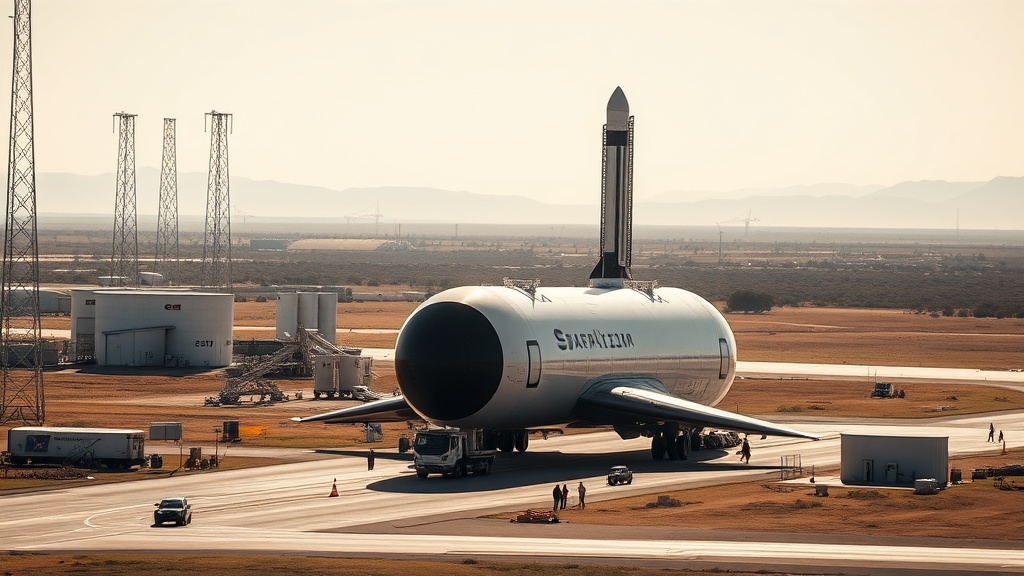
SpaceX’s proposal to move computing modules into orbit aims to resolve these issues by utilizing constant solar power available in space and employing radiator panels to manage heat through infrared radiation. The company intends to leverage its Starship launch capacity to transport large-scale computing hardware into orbit, potentially creating an extraterrestrial AI ecosystem that operates independently of Earth-bound resource limitations.
Economic Implications
By controlling the entire stack—from the rockets that deploy the infrastructure to the connectivity and power generation—SpaceX is attempting to establish itself as a primary utility provider for the AI economy. If successful, this model could allow the firm to offer AI infrastructure services to enterprises and developers with a level of control and scalability that current ground-based hyperscalers may find difficult to match. The transition marks a pivotal shift for the aerospace firm, moving it from a transportation provider to a core component of the global digital infrastructure landscape.