




Strategic Investment in European Manufacturing
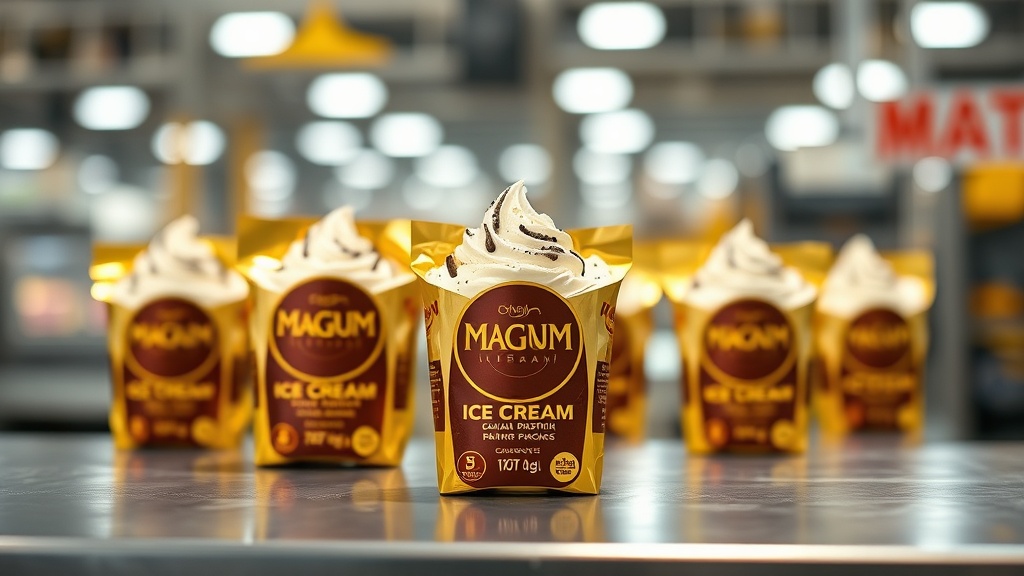
The Magnum Ice Cream Company (TMICC) has announced a significant capital investment in its Veszprém manufacturing facility in western Hungary. The company is deploying Ft4bn (€10m) to install a dedicated production line specifically designed for the manufacture of “Magnum Bonbons,” a move intended to address shifting consumer demand for smaller, shareable dessert formats.
According to TMICC, the “strategically important” facility, which currently employs over 500 personnel, serves both the Hungarian domestic market and broader European regions. Péter Konecsni, general manager for the company’s Hungarian operations, noted that the ice cream sector is increasingly defined by innovation in consumption occasions, transforming the product into a year-round snacking option rather than a seasonal treat.
Broader Supply Chain Restructuring
This localized expansion is part of a wider, company-wide initiative aimed at optimizing supply chain productivity and operational efficiency. Following its transition to a standalone entity, TMICC is targeting gross savings of up to €530m in the medium term. The company’s comprehensive efficiency program includes three primary focus areas:
- Supply Chain Optimization: Seeking up to €380m in gross savings through improved procurement and manufacturing productivity.
- Overhead Reduction: Targeting €70-100m in savings, citing lower costs as an independent company compared to its previous structure as a Unilever division.
- Tech-Enabled Productivity: Aiming for €30-50m in savings through technological integration.
TMICC reported that it had secured approximately €150m in savings during 2024 and the first half of 2025.
International Capital Projects
The Hungarian investment follows a similar capital project announced in November. TMICC revealed plans for a £50m ($65.6m) upgrade to its Gloucester factory in the United Kingdom. That project involves the installation of two new production lines, the replacement of an existing line, and a comprehensive rebuild of the site’s mix plant to increase capacity and operational efficiency for the UK and continental European markets.
As the company continues to scale its operations, these investments reflect a broader trend in the food and beverage industry toward balancing product innovation—such as smaller, “bite-sized” portions—with rigorous cost-management strategies aimed at long-term profitability.