
The Structural Advantage of Industrial Gas Infrastructure
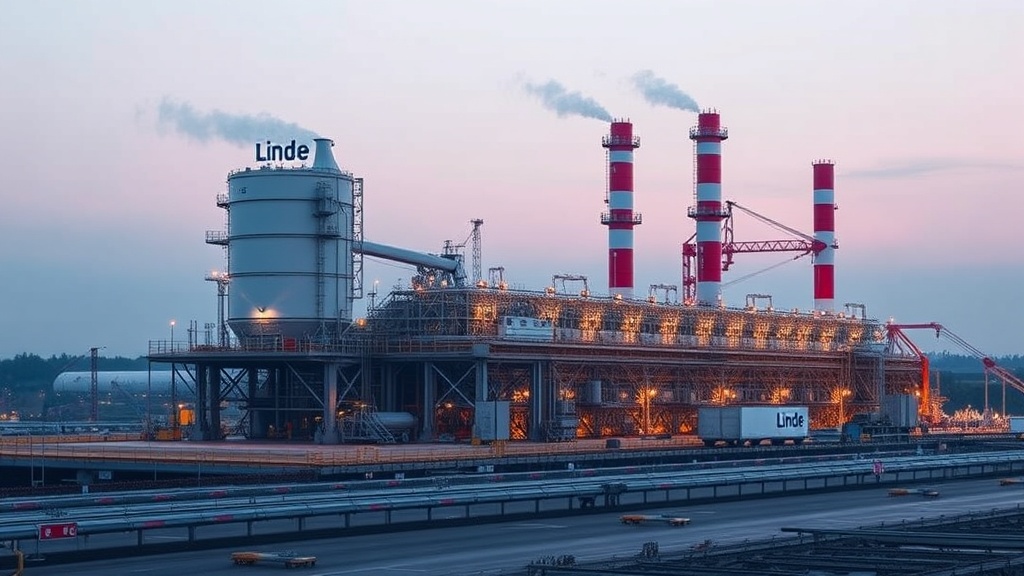
Linde plc (NASDAQ: LIN) continues to distinguish itself within the industrial sector through a business model anchored in long-term, take-or-pay contracts. By constructing production facilities directly adjacent to customer sites—including healthcare facilities, semiconductor foundries, and chemical refineries—the company creates a high barrier to entry. This physical and contractual integration ensures steady demand, as switching suppliers would be operationally prohibitive for the company’s industrial clients.
The strength of this model is evidenced by a $7.1 billion sale-of-gas backlog reported at the end of the first quarter of 2026. According to company leadership, these contracts are designed with rigorous language that holds firm even during varied economic conditions, insulating the firm from external force majeure claims. This operational stability resulted in an adjusted operating margin of 30.0% and a 23.8% return on capital for Q1 2026.
Dividend Growth and Capital Allocation
Linde has established a track record of consistent dividend growth, marking 33 consecutive years of increases. The company has maintained an average growth rate of 13% over this period, with quarterly payouts rising from $0.825 in 2018 to $1.60 in 2026. This dividend policy is supported by significant cash flow, with $10.4 billion in operating cash flow reported for fiscal year 2025.
Management continues to emphasize a balanced capital allocation strategy, returning $7.4 billion to shareholders through dividends and share repurchases in FY2025, with an additional $1.545 billion returned in the first quarter of 2026. As noted by the company’s investor relations team, this disciplined approach to capital deployment is a central component of their long-term corporate strategy.
Performance Through Economic Cycles
Linde’s financial performance has remained resilient despite what CEO Sanjiv Lamba described as “increasingly challenging global conditions.” In the first quarter of 2026, the company achieved 10% EPS growth, reporting adjusted EPS of $4.33. This result marked the eighth consecutive quarter in which the company exceeded consensus analyst estimates.
With a beta of 0.73, the stock exhibits lower volatility compared to the broader market, a characteristic that often appeals to defensive-oriented portfolios. Looking ahead, Linde’s FY2026 guidance projects adjusted EPS between $17.60 and $17.90. This forecast represents a 7% to 9% increase, an outlook that management notes assumes no significant improvement in the current global economic environment.
While the company’s defensive nature may lead to underperformance relative to high-beta, speculative sectors during market rallies, its long-term thesis remains focused on the compounding of margins and consistent cash distribution across multi-decade horizons.