




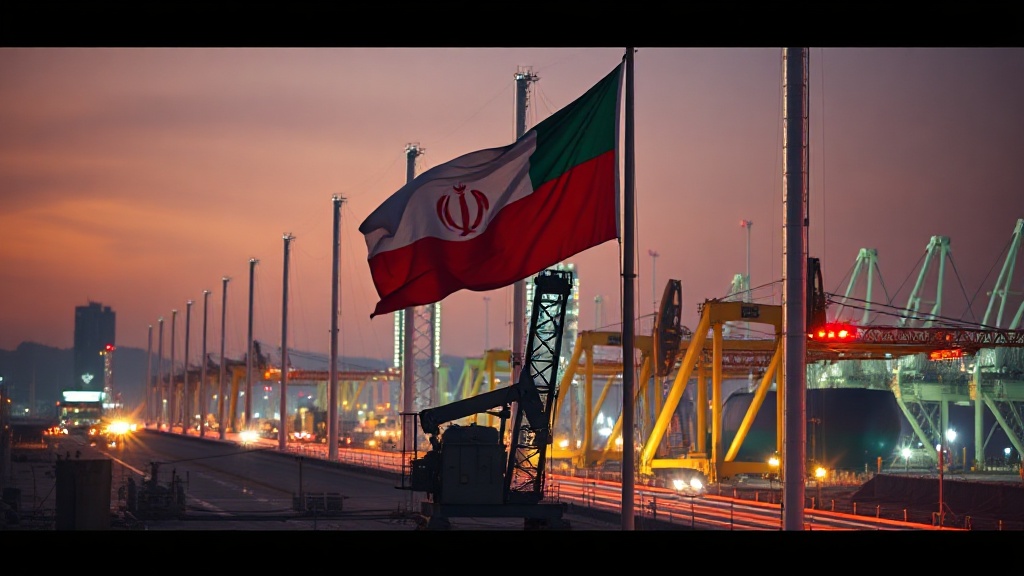
Market Relief Following Geopolitical De-escalation
Global equity markets began the trading week with significant gains, responding to the announcement of a peace agreement between the United States and Iran. The rally, characterized by record highs in European indices and sharp gains across Asia-Pacific markets, reflects a broad reduction in the geopolitical risk premium that has constrained investor sentiment in recent months.
The pan-European Stoxx 600 index climbed 0.9% to reach 639 points, surpassing the record high established immediately prior to the onset of the Iran conflict. Similarly, the UK’s FTSE 100 index jumped approximately 1% to 10,570 points, marking its highest level since late April. In Asia, Japan’s Nikkei surged 5%, driven by optimism regarding the potential reopening of the Strait of Hormuz.
Energy Price Volatility and Transmission Effects
Energy markets reacted sharply to the news, with Brent crude prices falling as low as $83.04 per barrel—a three-month low. While this represents a significant cooling from recent peaks, it remains above pre-conflict levels of $72.48. The anticipated reopening of the Strait of Hormuz is central to this shift, as analysts monitor the potential for logistically normalizing shipping volumes, which previously saw 120 to 140 commercial vessels transiting daily.
Market analysts note that energy prices have acted as a primary transmission channel for inflation, influencing bond yields and equity valuations. As Matt Britzman, senior equity analyst at Hargreaves Lansdown, observed, the deal provides investors with a clear rationale to reconsider the risk premiums that have dominated market conditions.
Implications for Central Banks and Inflation
The cooling of oil prices arrives at a critical juncture for central bank policy. With the Bank of England, the US Federal Reserve, and the Bank of Japan all scheduled to deliberate on interest rates this week, the potential for lower energy-driven inflation may alter the policy outlook. Kathleen Brooks, research director at XTB, noted that the decline in oil prices could ease concerns regarding price pressures, potentially raising questions about the necessity of aggressive rate-tightening measures.
Key Market Indicators
- Stoxx 600: Rose 0.9% to 639 points.
- FTSE 100: Increased 99 points to 10,570.
- Oil (Brent): Fell to $83.04 per barrel, the lowest since March 10.
- Currency: The US dollar weakened as market participants shifted toward risk-on assets, with the pound rising to $1.3438.
Sector-Specific Performance
The market rotation has been distinct, with sectors that previously suffered from conflict-related supply chain disruptions experiencing rallies. Mining and travel stocks led gains on the FTSE 100, while major energy producers including BP and Shell saw share prices decline by approximately 3.7%, as investors adjusted for the potential end of war-driven earnings premiums.
While the diplomatic breakthrough has been well-received, analysts remain cautious regarding the implementation phase. A 60-day window for finalizing the agreement and potential hurdles involving sanction relief and the physical clearing of shipping channels suggest that volatility may persist until logistical capacity is fully restored.