




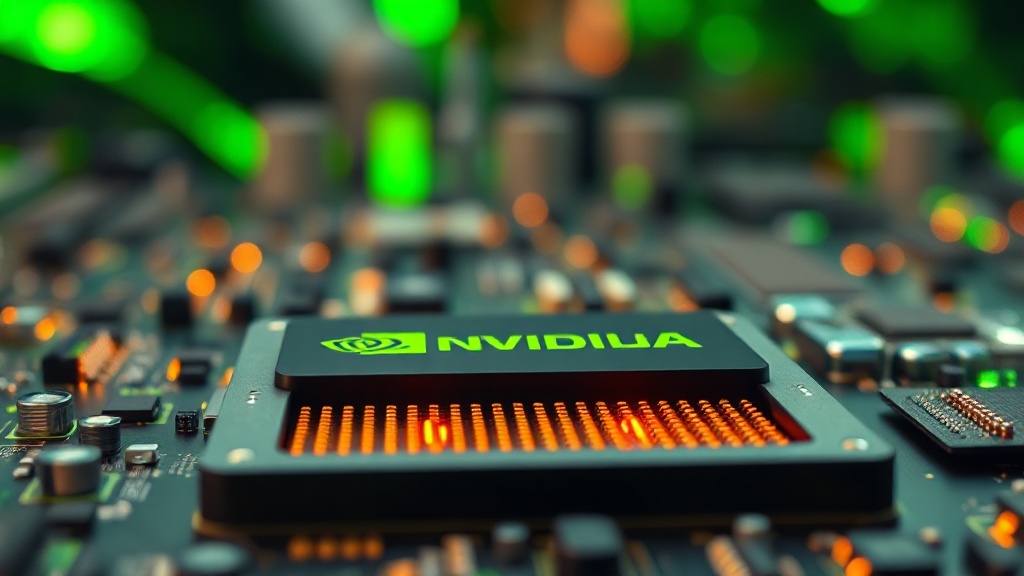
Nvidia Expands Beyond GPUs into Central Processing
Nvidia is signaling a strategic shift in its product roadmap with the announcement of the Vera CPU, a new central processing unit designed to handle complex AI workloads. While the company has long dominated the GPU market, this move places it in direct competition with the established CPU duopoly held by Intel and AMD, which currently command over 90% of the market share.
According to recent industry analysis discussed on The Motley Fool Hidden Gems Investing podcast, the Vera CPU is built on an ARM architecture and is designed to integrate seamlessly with Nvidia’s Blackwell GPUs and the new Rubin platform. Industry observers note that Nvidia is positioning this hardware as a specialized “traffic controller” capable of managing agentic AI environments—where autonomous agents must execute code and search databases—more efficiently than traditional X86 architecture.
Impact on Established Players
The market impact remains a subject of debate among analysts. While Nvidia claims its Vera CPU can significantly outperform existing flagship processors in enterprise workloads, the long-term threat to incumbents like Intel and AMD is not yet clear.
- AMD: Analysts suggest that AMD’s diversified business, particularly in the data center space, provides a buffer against potential CPU market share erosion in the high-end PC segment.
- Intel: As a company with revenue more heavily reliant on its CPU business, Intel may face greater immediate competitive pressure, though its stock performance remains tethered to long-term growth potential rather than current sales figures.
Market experts caution that there is currently no third-party performance data for the Vera CPU, and pricing details remain unknown. Consequently, the chip is expected to occupy a niche, high-end segment of the market rather than immediately displacing mass-market processors.
Strategic Vertical Integration
Nvidia’s approach centers on vertical integration. By bundling its proprietary Vera CPUs with its advanced Rubin GPU platforms, the company is creating a unified ecosystem. For major cloud providers and AI developers, this “package deal” approach is intended to prevent the performance bottlenecks that can occur when mixing different hardware architectures.
While the company is projecting significant growth in CPU revenue, the ultimate success of the Vera CPU will depend on its ability to convince enterprise clients to pivot away from the legacy X86 architecture that has served as the backbone of enterprise computing for decades. For now, the move represents a calculated effort by Nvidia to extend its influence from the graphics processing layer into the core of the computing stack.