




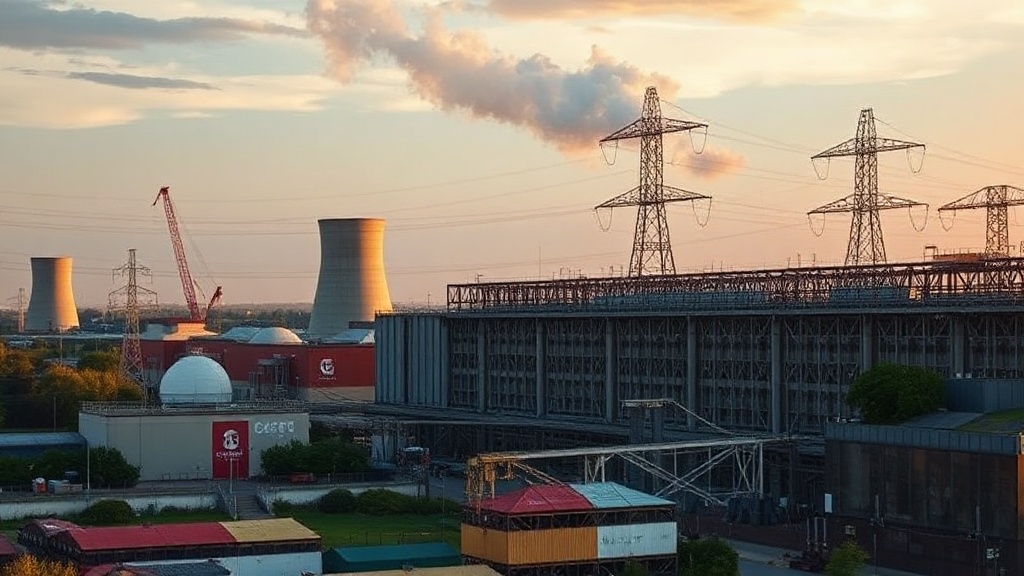
The Convergence of Artificial Intelligence and Energy Infrastructure
The rapid expansion of artificial intelligence infrastructure is fundamentally altering the U.S. power equation. As major technology companies—including Microsoft, Meta, Amazon, and Alphabet—project combined capital expenditures exceeding $710 billion for 2026, the demand for reliable, carbon-free, 24/7 baseload electricity has moved to the forefront of market analysis. The U.S. Energy Information Administration (EIA) has projected that electricity consumption from data center servers could climb to 818 billion kilowatt-hours by 2050, representing a more than 16-fold increase from 2020 levels.
Against this backdrop, the nuclear energy sector has experienced a notable market correction, with several prominent stocks retreating roughly 20% over the past month. This pullback has prompted renewed institutional interest in nuclear utilities, fuel providers, and diversified investment vehicles as investors weigh the long-term potential of government-backed growth and hyperscaler procurement contracts.
Key Industry Players and Market Dynamics
Several entities remain central to the discussion regarding the scaling of nuclear power to meet AI-driven demand:
- Constellation Energy (NASDAQ: CEG): As the largest nuclear operator in the United States, Constellation has positioned itself as a critical partner for data center developers. Following the acquisition of Calpine in early 2026, the firm now manages approximately 55 gigawatts of capacity. The company has secured long-term Power Purchase Agreements (PPAs) with major technology firms, including Microsoft and Meta. While the company reported strong revenue growth in the first quarter of 2026, analysts continue to monitor the impact of its increased long-term debt and the operational execution of its expanded fleet.
- Cameco (NYSE: CCJ): As a leading publicly traded uranium miner and owner of 49% of Westinghouse, Cameco represents the fuel-cycle and reactor technology component of the nuclear thesis. Despite recent earnings misses in revenue, the company has seen growth in adjusted net earnings. The firm’s long-term outlook is supported by a global commitment from 38 countries to triple nuclear capacity by 2050, alongside ongoing strategic partnerships for the deployment of AP1000 reactor technology.
- VanEck Uranium and Nuclear ETF (NYSEARCA: NLR): For investors seeking broad exposure to the sector, this fund provides a diversified approach encompassing utilities, mining operations, and nuclear services. While the ETF offers a hedge against the volatility of single-name stocks, it remains subject to the performance of its largest constituents and the inherent limitations of a basket structure.
Policy and Future Catalysts
The narrative for the nuclear sector is increasingly driven by policy frameworks and infrastructure support. The U.S. Department of Energy (DOE) has signaled potential support through billions in loan guarantees for nuclear infrastructure, and the PJM Reliability Backstop Procurement framework is expected to facilitate expanded bilateral contracting for data centers by March 2027.
However, market participants remain cautious regarding sector-specific risks, including regulatory uncertainties, tariff pressures, and the valuation premiums currently assigned to high-growth energy assets. As the EIA maintains its forecast for significant annual electricity consumption growth through 2050, the sustainability of the hyperscaler-driven demand thesis remains a primary factor for long-term strategic planning in the energy markets.