
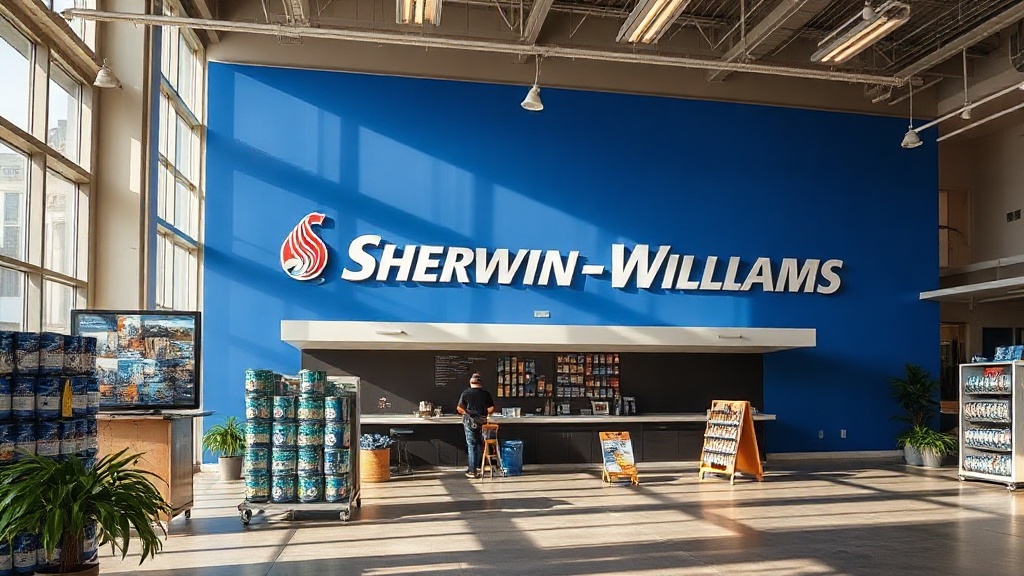



The Sherwin-Williams Company (NYSE: SHW), a global leader in the manufacturing and distribution of paints and coatings, is navigating a challenging macroeconomic environment characterized by cooling demand in its core professional and industrial sectors. Insights from the Aoris International Fund’s Q1 2026 investor letter highlight how broader economic trends are currently weighing on the company’s growth trajectory.
Macroeconomic Pressures on Paint Demand
According to the commentary provided by Aoris Investment Management, Sherwin-Williams’ performance is intrinsically linked to the health of the U.S. property market. A significant driver of paint demand is the volume of residential property sales, as homeowners frequently undertake painting projects shortly after a purchase. However, the combination of elevated mortgage rates and decelerating population growth has constrained transaction volumes, directly impacting the company’s paint sales volumes.
Beyond the residential sector, the company’s industrial coatings segment has also encountered friction. Aoris noted that growth in this division has remained sluggish, mirroring the broader slowdown observed in the industrial economy. Despite these headwinds, the firm acknowledged that Sherwin-Williams has maintained its market share, even as end-market conditions remain structurally slower than in previous periods.
Market Positioning and Hedge Fund Sentiment
As of June 23, 2026, The Sherwin-Williams Company closed at $322.90 per share, with a market capitalization of approximately $79.64 billion. While the stock saw a one-month return of 4.17%, it recorded a 6.03% decline over the trailing 52-week period.
Institutional interest in the company has shown a slight contraction. Data indicates that 73 hedge fund portfolios held positions in the company at the end of the first quarter of 2026, a decrease from 83 in the preceding quarter. This shift reflects a reevaluation of the stock’s growth potential relative to other segments, such as software and services, which have seen increased investor attention due to advancements in artificial intelligence.
Looking Ahead
The challenges facing Sherwin-Williams underscore the sensitivity of the building materials and industrial supply sectors to interest rate policy and macroeconomic cyclicality. While the company continues to leverage its strong position with professional painters in the U.S., its short-term performance remains tethered to the recovery of the housing market and a potential rebound in industrial activity.
Investors and analysts continue to monitor the firm’s ability to navigate these structural constraints as they look for signs of a turnaround in property transaction volumes and broader industrial output.