




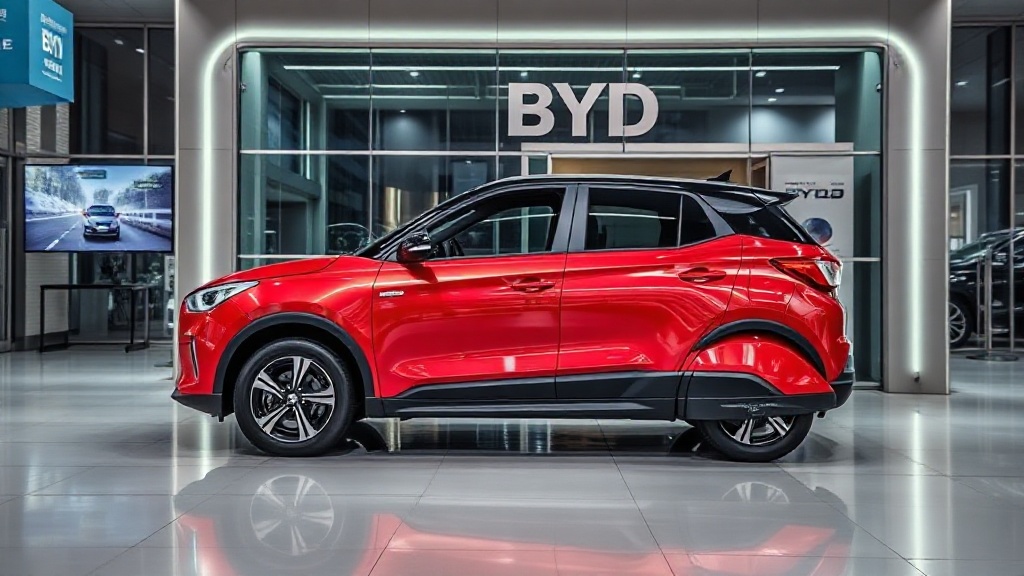
BYD Sees Shift in Sales Momentum
Chinese automotive giant BYD has marked a significant turning point, recording its first year-on-year sales increase in nine months. According to the company’s latest data for May 2026, the Shenzhen-based manufacturer sold 383,453 new energy vehicles (NEVs), reflecting a marginal but symbolic 0.3% increase compared to the 382,476 units sold during the same period in 2025.
Breakdown of Performance
While the overall sales growth remains modest, the report highlights varying performance across different vehicle segments:
- Passenger Vehicles: Deliveries remained largely stable at 376,990 units, compared to 376,930 units a year prior.
- BEVs vs. PHEVs: Battery electric vehicle (BEV) sales saw a slight contraction of 2.8%, totaling 198,674 units. Conversely, plug-in hybrid electric vehicle (PHEV) sales climbed 3.3% to 178,316 units.
- Commercial Vehicles: This segment showed growth, rising to 6,463 units from 5,546 units in the previous year.
Despite the positive monthly uptick, the company’s cumulative performance for the first five months of 2026 shows a decline of 20.3% compared to the same period in 2025, with total sales reaching 1.41 million vehicles.
Strategic Expansion and Innovation
BYD continues to bolster its market position through international expansion and technological development. A key driver for the company remains its export strategy, with 160,644 NEVs shipped to overseas markets during the month of May.
The company is also diversifying its product footprint in international markets. Notably, BYD recently introduced the Dolphin Cargo e-Van in the UK. This light commercial vehicle (LCV) is converted locally in the UK, a move designed to leverage local engineering expertise and better serve British commercial operators.
Advancements in Autonomous Technology
“BYD unveiled the Xuanji A3, which it described as China’s first 4nm intelligent driving chip, as part of its wider efforts in autonomous and assisted driving technologies.”
Beyond vehicle sales, BYD is aggressively pursuing leadership in automotive intelligence. The introduction of the Xuanji A3 chip, utilizing a 4nm manufacturing process, underscores the company’s commitment to integrating advanced computing into its vehicle lineups. By narrowing the spacing between transistors to four nanometres, the company aims to enhance the performance and efficiency of its intelligent driving systems.