




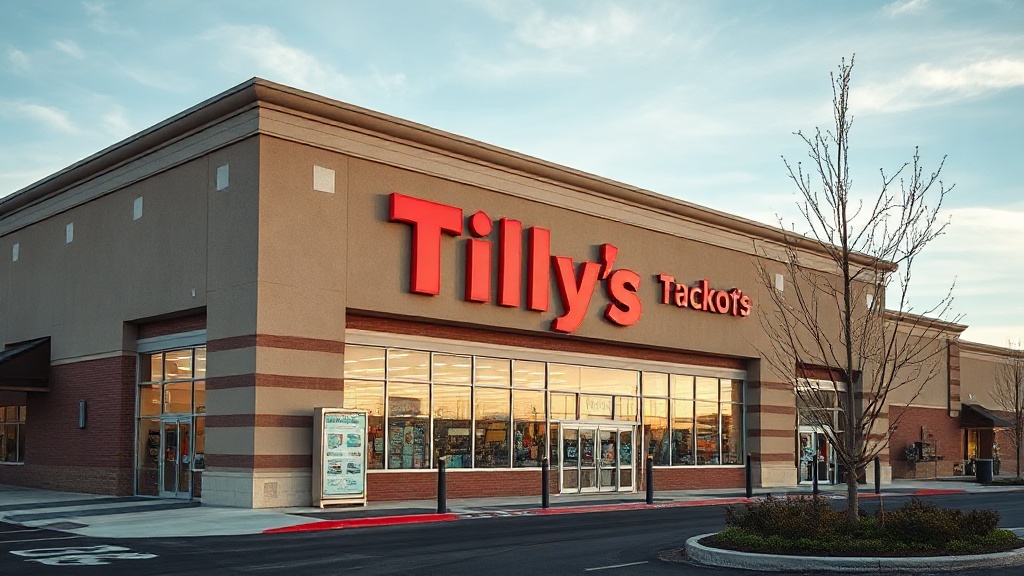
The retail landscape continues to undergo a shift characterized by selective store closures and a focus on operational efficiency. Tilly’s, a long-standing retailer of youth-oriented apparel and action sports gear, has confirmed a significant reduction in its physical footprint, part of a broader strategy to bolster margins and return to historical productivity levels.
Strategic Downsizing and Financial Performance
According to the company’s recent filings, Tilly’s has closed 28 stores over the past two years, reducing its total operational footprint by approximately 11%. As of the close of the first quarter of fiscal 2026, the company maintained 220 active locations, down from 248 at the end of the first quarter of 2024.
Management indicates that this downsizing is yielding measurable financial improvements. In its fiscal 2026 first-quarter report, Tilly’s noted that net sales from physical stores rose 12.1% to $96.3 million, despite the reduction in the total number of brick-and-mortar outlets. This growth, coupled with a 30.9% increase in e-commerce net sales, contributed to an improved net loss position of $8.0 million, compared to a $22.2 million loss in the same period of the previous year.
CEO Nate Smith highlighted that the optimization process has helped reduce occupancy, buying, and distribution costs. “Returning to historical levels of store sales, productivity, and the operating performance this business is capable of is the goal we’re driving toward,” Smith noted in a recent conference call.
The Broader Mall Retail Context
The movement toward store optimization is not unique to Tilly’s. Several other established brands have engaged in similar consolidation strategies to protect profit margins in a competitive retail environment. Recent data from industry analysts and retail tracking firms suggests that this trend reflects a recalibration of store portfolios rather than a broad-based decline in physical retail.
Data from the June 2026 Placer.ai Mall Index indicates that foot traffic remains positive, with year-over-year increases at both open-air shopping centers and indoor malls. Retail analysts note that while some brands have shuttered underperforming locations, the market for high-quality retail space remains resilient, with top-tier malls maintaining high occupancy rates.
Outlook and Operational Adjustments
Looking ahead, Tilly’s management has signaled a more balanced approach to its store network. While the company closed four stores during the first quarter of fiscal 2026, it simultaneously opened one new location. Plans are in place to open two additional stores in late July and one in late October, alongside further minor adjustments to the store count by the end of the fiscal year.
To further support these efforts, the company is investing in technology, including an AI-driven merchandise allocation tool scheduled to launch before the upcoming holiday season. This tool is designed to improve inventory accuracy across both physical and digital channels, reflecting the company’s broader objective of maximizing efficiency across its remaining footprint.