

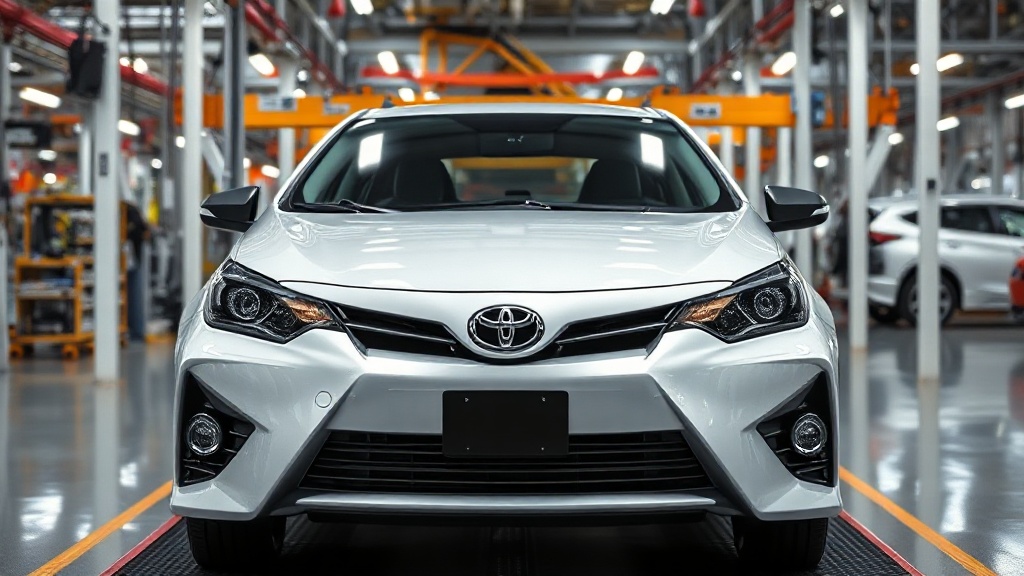


Toyota Motor Corporation is revising its manufacturing strategy, announcing plans to further reduce overseas vehicle production by approximately 100,000 units through February 2027. The adjustment follows ongoing concerns regarding regional stability near the Strait of Hormuz, which continues to impact global fuel costs and consumer demand.
Supply Chain and Market Factors
According to reports, the production cuts are largely driven by geopolitical instability in the Middle East, specifically military strikes involving Iran, the U.S., and Israel. These events have disrupted tanker traffic through the Strait of Hormuz, a critical maritime chokepoint. The subsequent rise in energy prices has pressured consumer spending patterns, particularly in Middle Eastern and Chinese markets.
Toyota previously implemented a reduction of approximately 40,000 units in domestic output for vehicles destined for the Middle East earlier this year. The newly announced revisions surpass the automaker’s earlier projection of an 83,000-vehicle reduction planned for the June-to-November period.
Impact on Specific Models
The production adjustments affect a diverse range of vehicles, including both traditional internal combustion engine models and electric vehicles (EVs):
- Petrol-powered vehicles: Reductions will include variants of the RAV4 SUV and the Avalon sedan.
- Electric vehicles: Output for the Chinese market, which is experiencing intense competition, is being scaled back. Models affected include the bZ3X entry-level EV and the bZ7 sedan.
- Sedans: Production of the Camry sedan is also slated for reductions.
Conversely, the company is shifting some of its manufacturing focus back to Japan. Toyota intends to increase domestic production by 4,200 vehicles during the second half of the current fiscal year compared to earlier May projections. This increase is primarily targeted at the RAV4 and the Land Cruiser 250 SUV, while Lexus ES production for the Chinese market will be curtailed due to soft demand.
Fiscal Outlook
Before these revisions, Toyota had targeted a total output of approximately ten million Toyota and Lexus vehicles for the fiscal year ending March 2027, representing a modest 1% year-on-year increase. While preliminary agreements have suggested a potential path toward reopening the Strait of Hormuz, the company noted that persistently elevated energy costs remain a factor in deferred consumer purchases.
Toyota has reportedly informed its key suppliers of these revised volume expectations as it navigates the volatile geopolitical environment and intensifying competition in the global electric vehicle sector.