



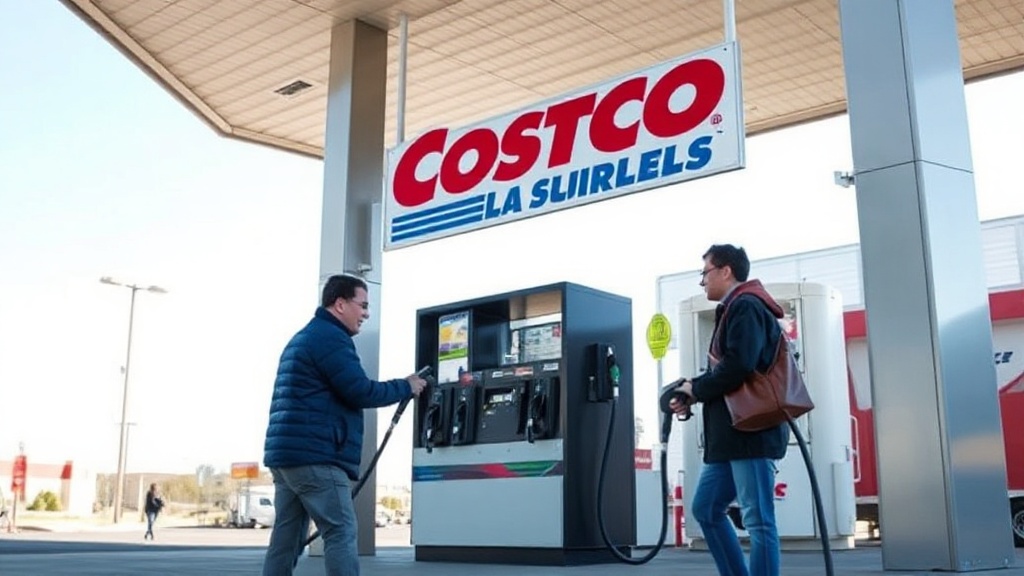
As national gasoline prices fluctuate, Costco members may notice that the warehouse club does not always reduce its pump prices as rapidly as other retailers. This is not an oversight, but a deliberate component of the company’s long-term business strategy designed to manage margins and incentivize membership loyalty.
The Costco Pricing Mechanism
Costco’s approach to fuel pricing is intentionally asymmetrical. When market prices for gasoline rise, the retailer often absorbs some of the costs to keep prices competitive for its members. Conversely, when market prices decline, the company slows the pace of its own price reductions. According to former Costco CFO Richard Galanti, this practice allows the company to recoup margins that were compressed during periods of rising costs while remaining highly competitive in its local markets.
Unlike traditional gas stations that rely on fuel as a primary profit center, Costco views its fuel business primarily as a driver for foot traffic and a tool for member retention. By maintaining a reputation for lower-than-average prices, the company encourages members to visit the warehouse, where they are statistically likely to engage in additional shopping.
Contrast with Kroger and Walmart
While Costco utilizes a low-price, high-volume model, other major retailers like Walmart and Kroger employ complex loyalty and incentive programs to manage consumer fuel spending.
- Walmart: Integrates fuel savings into its Walmart+ subscription service, offering members a discount of $0.10 per gallon at participating stations, including Exxon, Mobil, and Murphy USA.
- Kroger: Utilizes a “Fuel Points” program that rewards grocery spending with discounts at the pump. The retailer frequently runs promotions, such as “4X Fuel Points” on Fridays, which require customers to engage with digital coupons and track point balances.
Industry analysts suggest that Costco’s “frictionless” model—where members simply present their card to receive the price—offers a distinct advantage over the more complex loyalty gamification used by competitors. This simplicity is particularly appealing to “convenience-fatigued” consumers who may find multi-step loyalty programs burdensome.
Macroeconomic Context
The focus on fuel pricing comes as U.S. households navigate sustained pressure from energy costs. Recent data indicates that approximately 61% of consumers feel that gas prices are impacting their ability to afford other essential expenses. Economists at BMO Capital Markets have noted that sustained high fuel prices act as a tax on personal consumption, potentially reducing annual household spending power by significant margins.
For Costco, the strategy appears to be effective. The company reported record gas sales by volume during its third quarter, fueled by high consumer price sensitivity. This trend has also introduced a new segment of members to the warehouse’s fuel stations, a group the company expects will transition into more frequent in-store shoppers as their loyalty to the brand deepens.