




Introduction
As one of the most prominent electric vehicle (EV) manufacturers globally, Tesla (NASDAQ: TSLA) continues to capture investor attention with its innovative technology and ambitious growth plans. While Tesla recently reported its strongest quarter in years, its stock price has experienced volatility, prompting analysts and investors to ponder its future trajectory. Looking ahead to 2030, many are curious about where Tesla’s stock might be headed and what factors could influence its valuation over the next several years.
Recent Financial Performance and Market Sentiment
In the first quarter of 2026, Tesla posted impressive earnings, with earnings per share (EPS) reaching $0.41, surpassing the consensus estimate of $0.36. The company’s automotive gross margin expanded significantly to 21.1%, up from 16.2% a year earlier. Operating income skyrocketed by 135.8% year-over-year, reflecting improved efficiency and strong demand for its vehicles.
Revenue from services and full self-driving (FSD) features also saw a substantial increase, jumping 42% year-over-year to $3.75 billion. The company now has approximately 1.28 million active FSD subscriptions, up 51%, underscoring the growing monetization of Tesla’s autonomous driving software.
Current Stock Price and Market Challenges
Despite these strong financial results, Tesla’s stock price stands at around $409.99, down approximately 8.83% year-to-date. The market remains cautious, demanding tangible proof of Tesla’s ability to scale AI monetization, autonomous vehicle deployment, and profitability of new ventures like Cybercabs and the Optimus robot.
Several headwinds are weighing on Tesla’s shares, including:
- Declines in energy storage revenue, which fell 12% year-over-year in Q1
- Rising operating expenses driven by increased AI research and development expenditures
- Global vehicle inventory increases, impacting supply chain dynamics
<li Regulatory and tariff uncertainties affecting margins and forecasts
Analyst Predictions and Future Valuations
Wall Street’s consensus target price currently sits at approximately $411.89, indicating little change from current levels. However, analysts’ ratings are mixed, with some recommending holding or buying Tesla stock, citing its growth potential.
Looking further ahead, a more optimistic model projects Tesla’s stock could reach around $510 by 2030, representing a total return of about 24.4%. In a bullish scenario, Tesla’s shares could climb as high as $644.91, while a more conservative, bear case suggests a possible decline to approximately $377.48.
The Path to $650 and the Key Catalysts
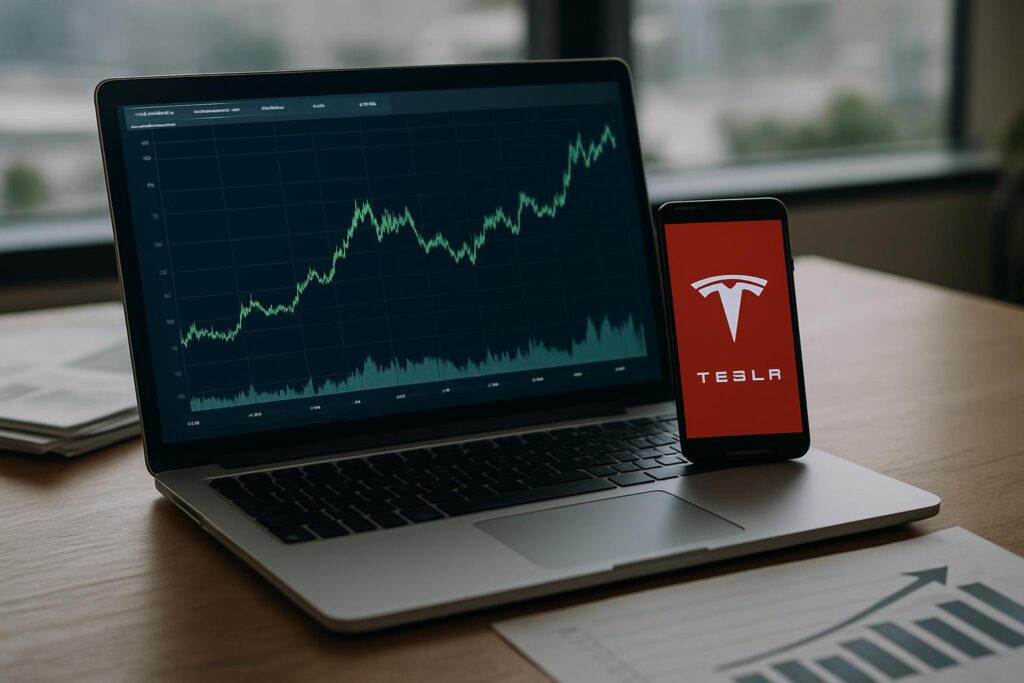
Reaching a stock price of $650 by 2030 from today’s level would require roughly a 58.5% gain. This would imply a forward P/E ratio exceeding 340x based on projected earnings, which is high but potentially justifiable if Tesla successfully scales its AI and autonomous vehicle businesses.
Several upcoming catalysts could propel Tesla’s valuation to these levels:
- Volume production of Tesla Semi trucks, Megapack 3, and Cybercabs in 2026
- Launch of FSD version 14.3 with improved inference latency
- Deployment of unsupervised Robotaxi services in cities like Dallas and Houston
- Continued growth in FSD subscription revenue and Optimus robot sales
Management has expressed confidence that profits from hardware will be complemented by increased AI, software, and fleet-based revenues, which could drive EPS higher and justify multiple expansions.
Risks and Challenges
Despite the optimistic outlook, risks remain. Capacity constraints, such as battery production limitations, could hinder vehicle deliveries. Additionally, delays in AI monetization or failure to meet volume targets for autonomous services could impact Tesla’s growth trajectory. Macro-economic volatility and regulatory hurdles also pose ongoing challenges.
Summary
While a $650 stock price by 2030 might seem ambitious, it’s within the realm of possibility given Tesla’s innovative pipeline and growth strategies. Achieving this level depends on several factors aligning favorably, including successful scaling of AI monetization, volume ramp-up of autonomous and semi-autonomous vehicles, and maintaining healthy profit margins.
Investors should keep a close eye on Tesla’s progress in these key areas, as well as broader market conditions, to gauge whether the company can realize its long-term valuation potential.