



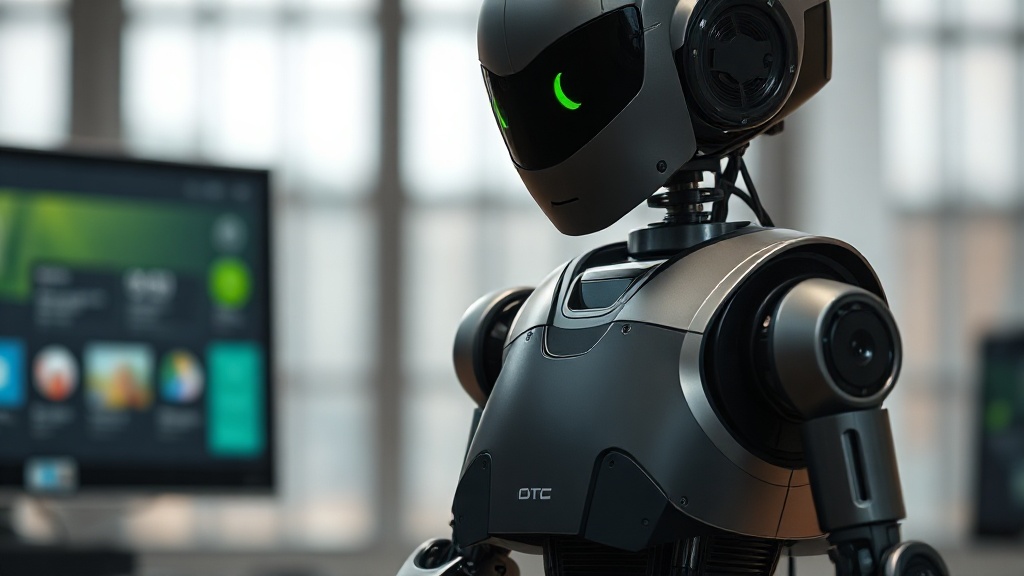
Nvidia CEO Jensen Huang has identified the emerging sector of humanoid robotics as a significant growth frontier, characterizing the field as a potential “multitrillion-dollar economic opportunity.” The company, already a dominant force in the high-performance computing and artificial intelligence chip markets, is increasingly directing its technological infrastructure toward the physical automation sector.
The Strategic Pivot to Physical AI
Nvidia’s interest in robotics is rooted in its broader strategy to expand the utility of its AI platforms beyond digital generative models. By leveraging its existing architecture—specifically its GPU-accelerated computing and simulation platforms—the company aims to provide the foundational technology required for training and deploying autonomous humanoid machines.
This shift represents an evolution in how the firm approaches artificial intelligence. While much of the recent market focus has remained on large language models (LLMs) and data center infrastructure, the integration of AI into physical environments, often referred to as ‘physical AI,’ requires the same high-compute capabilities that have defined Nvidia’s recent financial performance.
Market Implications of Robotics Integration
The push into humanoid robotics is seen as a long-term play to diversify the company’s revenue streams. Analysts have noted that as industrial sectors face persistent labor shortages and a drive for increased operational efficiency, the demand for sophisticated, general-purpose autonomous robots is expected to rise. Nvidia’s role in this ecosystem centers on:
- Simulation Environments: Utilizing digital twins to test and train robots in virtual environments before physical deployment.
- AI Training Infrastructure: Providing the necessary computational power to handle the complex sensory data processing required for bipedal movement and object interaction.
- Software Frameworks: Developing specialized software stacks that allow developers to build and deploy robotics applications more efficiently.
Broader Industry Outlook
While the prospect of a trillion-dollar robotics market remains speculative and contingent on rapid technological advancements in hardware and battery life, Nvidia’s focus underscores a clear industry trend. Major technology corporations are increasingly viewing the intersection of robotics and AI as the next phase of the industrial digital transformation. As Nvidia continues to refine its hardware and software offerings, the company’s ability to capture this market will likely depend on the scalability of its platforms and the pace at which robotics developers adopt its unified technology ecosystem.