




MPC Maintains Steady Course Amid Middle East Uncertainty
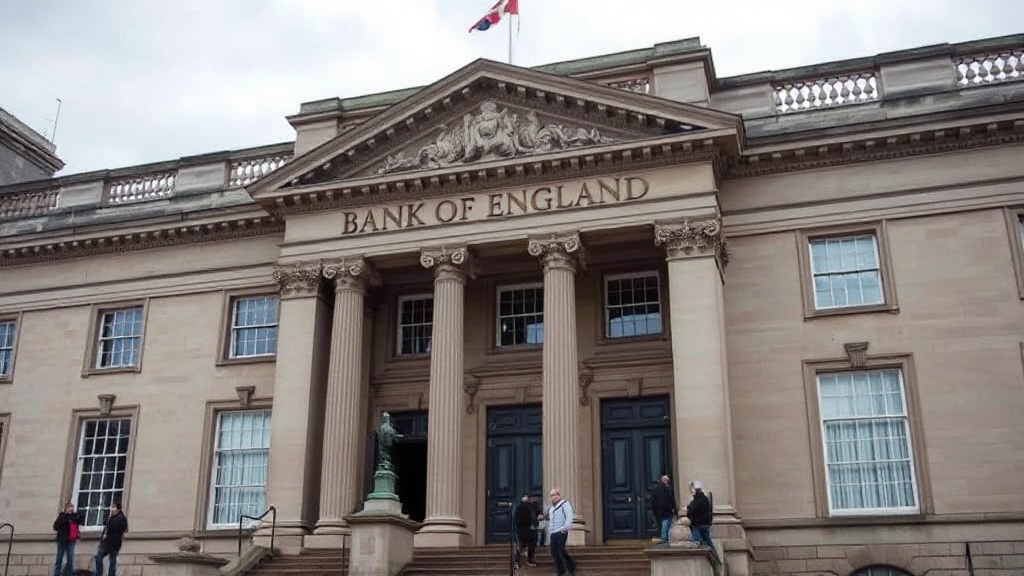
The Bank of England’s Monetary Policy Committee (MPC) has opted to keep the UK base interest rate unchanged at 3.75%, balancing the ongoing risks of energy-driven inflation against signs of domestic economic cooling. The decision, which saw seven of the nine committee members vote in favor of holding rates, reflects a cautious approach to the volatile geopolitical landscape.
Bank of England Governor Andrew Bailey signaled that while recent developments, including a de-escalation in Middle East tensions and a subsequent drop in global oil prices, are encouraging, the UK faces persistent price pressures. “There is still some inflationary pressure in the pipeline” resulting from the energy price spikes observed over the previous four months, Bailey noted following the announcement.
Inflation Outlook and Economic Trade-offs
The central bank has revised its inflation expectations downward, now projecting the Consumer Prices Index (CPI) to peak at approximately 3.25% in the final quarter of this year. While this remains significantly above the Bank’s 2% target, it is more moderate than previous scenarios had indicated.
Governor Bailey explained that the decision to hold rates was driven by a desire to avoid creating “undesirable volatility” during a period of economic uncertainty. He emphasized that the current weakness in the real economy and a softening labor market may serve as a natural buffer, helping to prevent inflation from becoming entrenched.
Divergent Views and Market Reaction
The committee was not unanimous in its decision. Two members, including the Bank’s chief economist Huw Pill and independent member Megan Greene, voted for a quarter-point increase to 4%, signaling concern that borrowing costs may need to rise further to anchor expectations.
Financial markets reacted to the decision with a notable shift in currency valuations; the pound declined to a 10-week low of $1.32 against the U.S. dollar. Despite the Bank’s decision to keep rates on hold, the minutes of the MPC meeting revealed that borrowing costs for consumers and businesses have already climbed significantly due to shifts in bond markets. The minutes noted a “full and fast pass-through” of these market-driven moves into mortgage products and business lending.
Contextualizing the Policy Environment
The Bank of England’s wait-and-see stance contrasts with the recent tightening cycle initiated by the European Central Bank. Meanwhile, the Federal Reserve—under the new leadership of Chair Kevin Warsh—simultaneously held U.S. rates in the 3.5% to 3.75% range.
As the MPC continues to monitor the impact of geopolitical shocks on the domestic economy, Governor Bailey underscored the importance of stability. With the UK labor market showing signs of contraction—evidenced by job vacancies falling to their lowest level in five years—the Bank remains focused on steering inflation back toward its medium-term target without stifling an already fragile economic recovery.