




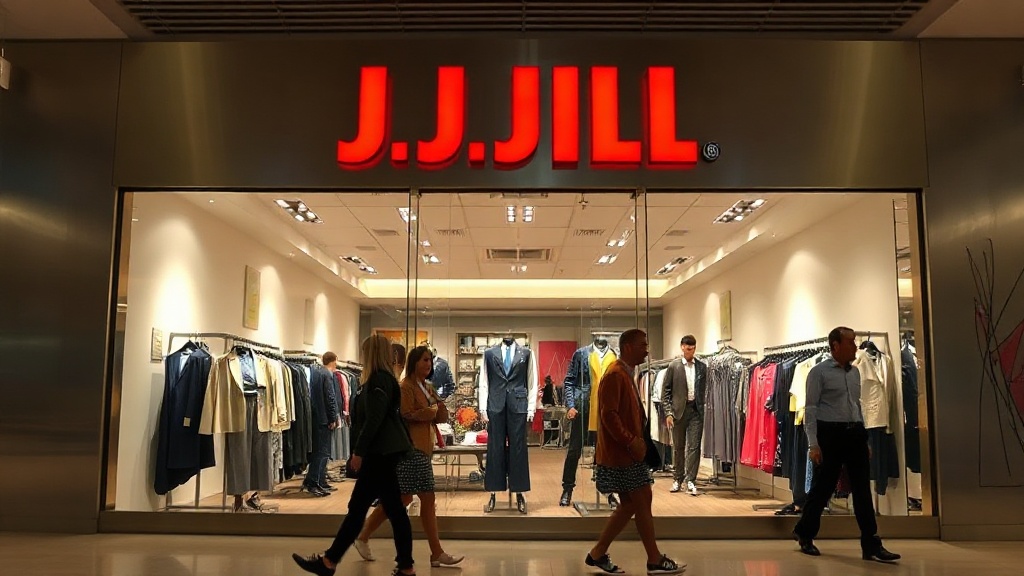
Women’s apparel retailer J.Jill (NYSE:JILL) reported first-quarter fiscal 2026 results that aligned with internal company expectations, even as the firm navigated a challenging retail environment characterized by soft consumer demand and increased cost pressures. The company continues to execute a multi-year brand and product transition aimed at broadening its customer base and evolving its assortment.
Financial Performance and Margin Pressure
For the first quarter, J.Jill reported sales of approximately $144 million, reflecting a 6% decline compared to the prior-year period. Total comparable sales decreased by 8.7%, a trend management attributed largely to ongoing difficulties in the direct-to-consumer channel. This segment experienced lower conversion rates and a higher reliance on markdown activity as consumers continued to exhibit significant price sensitivity.
Profitability was notably impacted during the quarter. Gross profit fell to $98.7 million, with gross margin contracting by 350 basis points to 68.3%. A primary driver of this margin compression was $4.7 million in net tariff costs. Furthermore, adjusted EBITDA declined to $16.7 million, down from $27.3 million in the same quarter last year. Adjusted net income per diluted share was reported at $0.45, compared to $0.88 in the prior-year period.
Strategic Brand Evolution
Chief Executive Officer and President Mary Ellen Coyne characterized the company’s current status as in the “early stage” of its business evolution. The strategy focuses on three core priorities: refining the product assortment, enhancing the customer journey, and advancing internal capabilities.
While the first-quarter collection remained dominated by legacy products, management noted positive early signals from new styles, particularly in the jacket and accessories categories. The company is seeking to balance its product mix to protect core customer preferences while introducing new silhouettes to attract younger, new-to-brand consumers. Additionally, J.Jill has begun rolling out its “J.Jill Collective” loyalty program, which management reports has shown early signs of traction.
Operational Adjustments and Full-Year Outlook
Despite current headwinds, J.Jill reaffirmed its full-year 2026 guidance. The company anticipates flat to 2% lower annual sales, with comparable sales expected to decline by 1% to 3%. Adjusted EBITDA for the full year is projected to fall between $70 million and $75 million.
The company is adjusting its operational footprint in response to macro uncertainty and shifts in the retail landscape. J.Jill has reduced its planned capital expenditures for the fiscal year to a range of $20 million to $25 million and now expects to open between one and five net new stores, a reduction from earlier projections. As of the end of the first quarter, the company operated 255 stores, representing a net increase of six locations compared to the same time last year.
Looking ahead, management emphasized that the transformation process will require patience. The firm noted it expects gradual, sequential improvement as new marketing strategies and product assortments are integrated across its retail and digital platforms.